Today, I read part of another chapter in J. Paul Sampley's Paul in the Greco-Roman World titled 'Paul, Families, and Households' by David L. Balch. So far it's been very interesting and good read overall, but I knew somewhere down the line I would run into something that would raise my eyebrows and today was it:
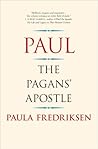
"Another key text for understanding Paul's attitude toward sexuality is Rom 1. Focusing on Greco-Roman philosophic and literary ways of conceptualizing sexual matters, Fredrickson concludes that 'in Romans 1:24-27 Paul points to the problem of passion without introducing the modern dichotomy of homo-hetero-sexuality.' Like his contemporaries, Paul writes about 'natural use' (φυσικὴν χρῆσιν) and 'unnatural use' (χρῆσιν … τὴν παρὰ φύσιν) of sexual desire (1:26, 27), which was thought to be analogous to the natural use of hunger. The pleasure of sex, then, is to be limited by satisfaction, just as a wise person with a full stomach limits eating. As we saw above, this use of 'natural' does not raise the question of the gender of either the subject or the object of sexual desire. Plutarch (Advice to Bride and Groom 144B) also refers to the wife's 'use' of the husband, to which Paul probably refers in Rom 1:26... which is not then a reference to lesbian sexual activity... Fredrickson agrees with Martin: by 'against nature', Paul means not 'disoriented desire' but 'inordinate desire.'" (Sampley, 277-278)
While the argument seems cogent enough, it seems to me that if we properly read Rom. 1:25 that establishes the Διὰ τοῦτο ("for this reason") in 1:26, it cannot be understated that the indictment found in this section is rooted in creation (e.g. serving the creation more than the Creator). Here's what a few people have said regarding this paragraph:
C.E.B. Cranfield, Romans: A Shorter Commentary, 35:
"By 'natural' and 'contrary to nature' Paul clearly means 'in accordance with the Creator's intention' and 'contrary to the Creator's intention', respectively. It is not impossible that Paul had some awareness of the great importance which 'nature' had in Greek thought for centuries; that he was aware of it use in contemporary popular philosophy is very likely. But the decisive factor in his use of it is his biblical doctrine of creation."
Douglas Moo, Romans (NICNT), 114-115:
"Paul generally uses the word 'nature' to describe the way things are by reason of their intrinsic state or birth, and in these cases there is no clear reference to divine intention. Some scholars in recent years especially, noting this, have argued that Paul does not here brand homosexuality as a violation of God's will... But Paul's use of the word 'nature' in this verse probably owes much to Jewish authors, particularly Philo... Sexual sins that are 'against nature' are also, then, against God, and it is this close association that makes it probable that Paul's appeal to 'nature' in this verse includes appeal to God's created order.
I'm just very skeptical that Balch is pushing for Paul's reference to Plutarch over against Philo and other Jewish writings...
What do you guys think?