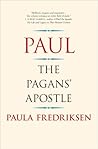
Apologies to my readers for my lack of much blogging lately. The workload at Duke is definitely pretty hefty, but my first semester went well and the second semester already began last week at full speed. Right now, I'm reading an article from John Kloppenborg titled "Synopses and the Synoptic Problem" which was presented at an Oxford conference in 2008 that I believe now can be found as a chapter in a Festschrift for Christopher Tuckett published in 2011. The question that we're thinking about is: are all synopses necessarily biased (that is to say, must they assume a particular stance to the Synoptic problem before presenting the evidence)? And if so, what do we do about it?
Friday, January 21, 2011

Thursday, January 20, 2011
Qualms
I think someone is hoarding books secretly at the Duke Divinity School library. I've been meaning to check out various books, and as I searched for them on the library catalogue online, it says "Available," but when I go look for them, it's not there! Now, I know what you might be thinking, that someone was probably using it at that time, but this has happened multiple times (for the same books even!) I've checked with the circulation desk and they say the same thing, "it must be in use by a student right now..." but frankly, either they're super incompetent by placing books in the wrong shelves numerous times (which I don't think they are) or someone is definitely hoarding these books or something and keeping a secret stash! I don't know, either way, it's been very frustrating.
Thursday, January 13, 2011
Q?
I'm currently reading through Studying the Synoptic Gospels by EP Sanders and Margaret Davies as introductory material to my Synoptic Gospels class this semester. In one section, they showed a diagram of one scholar's solution to the 'Synoptic Problem':
 This is FC Grant's 'Multiple Source Theory,' an elaborate cousin to what's widely known as the 'Two Source Theory' that posits Markan Priority for the Synoptic Gospels as well as the presence of a hypothetical source called Q (Quelle, German for 'source'). But my reaction when I saw this chart was not 'Ohh, I finally get it.' but rather 'What!?!' It's so complicated that I couldn't bear to really think through the implications of all those lines and sources. I know my professor, Mark Goodacre, is a proponent of the Farrer Theory, which posits Markan priority without the necessity for Q. I'm still not sure yet where I stand on this issue and it'll be interesting to see where I land as the semester unfolds. He'll have us create our own synopses and color-code various tradition materials (Double-tradition, Triple-tradition, etc.), which I think will be an excellent way to get our feet wet in the Synoptic Problem.
My question for you is: What's your take on Q and why?
 This is FC Grant's 'Multiple Source Theory,' an elaborate cousin to what's widely known as the 'Two Source Theory' that posits Markan Priority for the Synoptic Gospels as well as the presence of a hypothetical source called Q (Quelle, German for 'source'). But my reaction when I saw this chart was not 'Ohh, I finally get it.' but rather 'What!?!' It's so complicated that I couldn't bear to really think through the implications of all those lines and sources. I know my professor, Mark Goodacre, is a proponent of the Farrer Theory, which posits Markan priority without the necessity for Q. I'm still not sure yet where I stand on this issue and it'll be interesting to see where I land as the semester unfolds. He'll have us create our own synopses and color-code various tradition materials (Double-tradition, Triple-tradition, etc.), which I think will be an excellent way to get our feet wet in the Synoptic Problem.
My question for you is: What's your take on Q and why?
Saturday, January 1, 2011
A reading program for the new year?
I hope you all enjoy a wonderful weekend with family and friends, as we kick off another new year. I recently came across a blog that has created a chart for reading these two volumes in one year!
 The two volumes of the Old Testament Pseudepigrapha. The first volume contains apocalyptic literature (e.g. 1 Enoch) and various testaments (e.g. Testament of Moses) and the second volume contains expansions of OT and legends (e.g., Letter of Aristeas, Joseph and Asenath, etc.), wisdom/philosophical literature, prayer/psalms/odes, and fragments of lost Judeo-Hellenistic works (e.g. Ezekiel the Tragedian). Today and tomorrow is only the introduction in the first volume and the intro to 1 Enoch, so why not go here, and get started on a new reading program for 2011?
Happy New Year!
Wednesday, December 29, 2010
Justification and Politics?
I'm currently reading through Douglas Campbell's Deliverance of God as mentioned in my previous post. So far it's been pretty good but one consistent critique that I've encountered in virtually every review I read of this book is its length. One particular scholar, Beverly Roberts Gaventa, summarizes this critique as such in Christian Century:
"This is a book that deserves to be read, but virtually every conversation I have heard about the volume has touched on its formidable length (some of which is in small print). Campbell insists that his project requires such length if he is to bring down the citadel of Justification theory. I fear that the length is self-defeating, as it means that only the most determined specialist will work through to the end, and Campbell will have lost the readers he most wants to persuade."
On some levels, I think I can agree, I'm currently on page 305 and he's still clearing the ground, so to speak, so that he can eventually lay down his own interpretive framework, namely, an apocalyptic reading of Paul. Be that as it may, it's been very instructive so far and in this subsection titled 'Justification and Liberal Political Individualism,' Campbell looks into John Locke's political theory to see how the Justification paradigm fits with Locke's own program, furthering its own agenda while circumventing the need to have a tight connection to the Pauline texts themselves to establish the paradigm as viable. In one subpoint, Campbell lays out a pretty strong critique:
"In addition to its enjoyment of four significant affinities with liberal politics — individual contracts, the notion of consent, the privatization of religion, and the characterization of all human relationships in terms of a discourse of currency — Justification is unable to protest very vigorously against liberal politics ... Special revelation associated with either the Scriptures or the Christian dispensation is limited to the private sphere and constrained by the individual's need for faith alone. And tradition and institutional control are repudiated as not genuinely religious. Moreover, Justification finds it notoriously difficult to generate any significant ethical observance from its converts (indeed, it arguable cannot generate this). The theory is hostile to any religious activity beyond faith, labeling it derisively as "works." The ecclesia constituted by the theory remains similarly weak; it is fundamentally individualist, confessional, and voluntarist, rooted in consent. It can ask very little from its converts. And these limitations raise a frightening prospect."
I'm still on this chapter, so we'll see where this all leads. Meanwhile, it seems that the axe that Campbell is grinding is getting bigger and bigger...
"This is a book that deserves to be read, but virtually every conversation I have heard about the volume has touched on its formidable length (some of which is in small print). Campbell insists that his project requires such length if he is to bring down the citadel of Justification theory. I fear that the length is self-defeating, as it means that only the most determined specialist will work through to the end, and Campbell will have lost the readers he most wants to persuade."
On some levels, I think I can agree, I'm currently on page 305 and he's still clearing the ground, so to speak, so that he can eventually lay down his own interpretive framework, namely, an apocalyptic reading of Paul. Be that as it may, it's been very instructive so far and in this subsection titled 'Justification and Liberal Political Individualism,' Campbell looks into John Locke's political theory to see how the Justification paradigm fits with Locke's own program, furthering its own agenda while circumventing the need to have a tight connection to the Pauline texts themselves to establish the paradigm as viable. In one subpoint, Campbell lays out a pretty strong critique:
"In addition to its enjoyment of four significant affinities with liberal politics — individual contracts, the notion of consent, the privatization of religion, and the characterization of all human relationships in terms of a discourse of currency — Justification is unable to protest very vigorously against liberal politics ... Special revelation associated with either the Scriptures or the Christian dispensation is limited to the private sphere and constrained by the individual's need for faith alone. And tradition and institutional control are repudiated as not genuinely religious. Moreover, Justification finds it notoriously difficult to generate any significant ethical observance from its converts (indeed, it arguable cannot generate this). The theory is hostile to any religious activity beyond faith, labeling it derisively as "works." The ecclesia constituted by the theory remains similarly weak; it is fundamentally individualist, confessional, and voluntarist, rooted in consent. It can ask very little from its converts. And these limitations raise a frightening prospect."
I'm still on this chapter, so we'll see where this all leads. Meanwhile, it seems that the axe that Campbell is grinding is getting bigger and bigger...
Wednesday, December 8, 2010
Tome
Pronunciation: \ˈtōm\
-noun
1. a book, esp. a very heavy, large, or learned book.
2. a volume forming a part of a larger work.
-noun
1. a book, esp. a very heavy, large, or learned book.
2. a volume forming a part of a larger work.
From time to time, I've seen various books referred to as "tomes," but I don't think any of them comes close to this one:
 Amazing! The book comes in at 1248 pages (at least that's what Amazon says, though the page numbering actually ends at 1218 [probably earlier unmarked pages = 30 pp.]), with four parts that are broken down into 21 chapters. I'm really excited to start on this "tome," as I was given permission by Dr. Campbell to enroll in his PhD seminar on Pauline theology for the Spring semester. I've done work on Corinthians, Galatians, and 1 Thessalonians, but not much on Romans, so this should be an exciting but also challenging class to help me think after Paul's thoughts.
I hope I can walk away from this with some measure of confidence that I have grasped a little bit more of Paul's theology. From what I heard, Campbell has an interesting take on it which should make our classes very interesting. He mentioned in the introduction to the book that this work is over ten years in the making, so it's no surprise that it is so hefty. I was already intimidated by books that come in at pages number counts such as 535, 718, 740, 741, and 876, but this one is at 1248! Hope I can get through this in a timely manner...
 Amazing! The book comes in at 1248 pages (at least that's what Amazon says, though the page numbering actually ends at 1218 [probably earlier unmarked pages = 30 pp.]), with four parts that are broken down into 21 chapters. I'm really excited to start on this "tome," as I was given permission by Dr. Campbell to enroll in his PhD seminar on Pauline theology for the Spring semester. I've done work on Corinthians, Galatians, and 1 Thessalonians, but not much on Romans, so this should be an exciting but also challenging class to help me think after Paul's thoughts.
I hope I can walk away from this with some measure of confidence that I have grasped a little bit more of Paul's theology. From what I heard, Campbell has an interesting take on it which should make our classes very interesting. He mentioned in the introduction to the book that this work is over ten years in the making, so it's no surprise that it is so hefty. I was already intimidated by books that come in at pages number counts such as 535, 718, 740, 741, and 876, but this one is at 1248! Hope I can get through this in a timely manner...
Tuesday, December 7, 2010
Subscribe to:
Posts (Atom)