Wednesday, December 29, 2010

Justification and Politics?

I'm currently reading through Douglas Campbell's Deliverance of God as mentioned in my previous post. So far it's been pretty good but one consistent critique that I've encountered in virtually every review I read of this book is its length. One particular scholar, Beverly Roberts Gaventa, summarizes this critique as such in Christian Century:

"This is a book that deserves to be read, but virtually every conversation I have heard about the volume has touched on its formidable length (some of which is in small print). Campbell insists that his project requires such length if he is to bring down the citadel of Justification theory. I fear that the length is self-defeating, as it means that only the most determined specialist will work through to the end, and Campbell will have lost the readers he most wants to persuade."

On some levels, I think I can agree, I'm currently on page 305 and he's still clearing the ground, so to speak, so that he can eventually lay down his own interpretive framework, namely, an apocalyptic reading of Paul. Be that as it may, it's been very instructive so far and in this subsection titled 'Justification and Liberal Political Individualism,' Campbell looks into John Locke's political theory to see how the Justification paradigm fits with Locke's own program, furthering its own agenda while circumventing the need to have a tight connection to the Pauline texts themselves to establish the paradigm as viable. In one subpoint, Campbell lays out a pretty strong critique:

"In addition to its enjoyment of four significant affinities with liberal politics — individual contracts, the notion of consent, the privatization of religion, and the characterization of all human relationships in terms of a discourse of currency — Justification is unable to protest very vigorously against liberal politics ... Special revelation associated with either the Scriptures or the Christian dispensation is limited to the private sphere and constrained by the individual's need for faith alone. And tradition and institutional control are repudiated as not genuinely religious. Moreover, Justification finds it notoriously difficult to generate any significant ethical observance from its converts (indeed, it arguable cannot generate this). The theory is hostile to any religious activity beyond faith, labeling it derisively as "works." The ecclesia constituted by the theory remains similarly weak; it is fundamentally individualist, confessional, and voluntarist, rooted in consent. It can ask very little from its converts. And these limitations raise a frightening prospect."


I'm still on this chapter, so we'll see where this all leads. Meanwhile, it seems that the axe that Campbell is grinding is getting bigger and bigger...

Wednesday, December 8, 2010

Tome

Pronunciation: \ˈtōm\

-noun
1. a book, esp. a very heavy, large, or learned book.
2. a volume forming a part of a larger work.

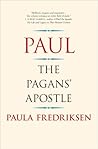
From time to time, I've seen various books referred to as "tomes," but I don't think any of them comes close to this one:

Amazing! The book comes in at 1248 pages (at least that's what Amazon says, though the page numbering actually ends at 1218 [probably earlier unmarked pages = 30 pp.]), with four parts that are broken down into 21 chapters. I'm really excited to start on this "tome," as I was given permission by Dr. Campbell to enroll in his PhD seminar on Pauline theology for the Spring semester. I've done work on Corinthians, Galatians, and 1 Thessalonians, but not much on Romans, so this should be an exciting but also challenging class to help me think after Paul's thoughts.

I hope I can walk away from this with some measure of confidence that I have grasped a little bit more of Paul's theology. From what I heard, Campbell has an interesting take on it which should make our classes very interesting. He mentioned in the introduction to the book that this work is over ten years in the making, so it's no surprise that it is so hefty. I was already intimidated by books that come in at pages number counts such as 535, 718, 740, 741, and 876, but this one is at 1248! Hope I can get through this in a timely manner...

Tuesday, December 7, 2010

Spices

First there was this ultra-funny Old Spice commercial:


Then there's this, New Spice:


HT: Near Emmaus

Wednesday, November 24, 2010

Non-canonical Gospels

There's always talks about what Gospel actually has "real" data in terms of the historical Jesus, more accurate historically, etc. etc. And one document outside of the canon is the Gospel of Peter, which I just read today from the NT Apocrypha (it's not that long, so if you're interested go here to get the Greek text). In this document, there is an interesting little section:

9.34. Early in the morning, when the sabbath dawned, there came a crowd from Jerusalem and the country round about to see the sepulchre that had been sealed. 35 Now in the night in which the Lord's day dawned, when the soldiers, two by two in every watch, were keeping guard, there rang out a loud voice in heaven, 36 and they saw the heavens opened and two men come down from there in a great brightness and draw nigh to the sepulchre. 37 That stone which had been laid against the entrance to the sepulchre started of itself to roll and gave way to the side, and the sepulchre was opened, and both the young men entered in.
10.38 When now those soldiers saw this, they awakened the centurion and the elders - for they also were there to assist at the watch. 39 And whilst they were relating what they had seen, they saw again three men come out from the sepulchre, and two of them sustaining the other, and a cross following them, 40 and the heads of the two reaching ot heaven, but that of him who was led of them by the hand overpassing the heavens. 41 And they heard a voice out of the heavens crying, 'Hast thou preached to them that sleep?', 42 and from the cross there was heard the answer, 'Yea'.

I've heard this passage being referred to from time to time to show the fantastic nature of these "later" Gospels, in particular with respect to a talking cross. I was just reminded by Brian LePort that one scholar, Mark Goodacre recently blogged about this. His suggestion is "that we conjecturally emend the text from σταυρον to σταυρωθεντα, from "cross" to "crucified", so that it is no longer a wooden cross that comes bouncing out of the tomb but rather Jesus, the "crucified one" himself." I haven't personally looked at the Greek text yet, but this is an interesting post that has generated some discussion, so go and read the Gospel of Peter if you're interested and join in the discussion at the NT Blog.

Tuesday, November 23, 2010

Quote of the Day

Francis Watson on Paul and Habakkuk:

If it seems self-evident that the apostle and the prophet can have little or nothing in common, this betrays the continuing influence of a hermeneutic according to which texts are addressed to and contained by their immediate circumstances of origin, and that all subsequent usage marks a deviation from their "original meaning". In the present discussion, the limitations of this hermeneutic have become clear at point after point. The text of Habakkuk explicitly presents itself as written for a future of unknown duration; it privileges the reader over the author, and confines its reference to an identifiable historical situation toa single allusion to the "Chaldeans". It is the same "canonical process", but at a more advanced stage, that leads to the incorporation of this book within the larger collection of the Book of the Twelve. While the arrangement of the book is designed to reflect the unfolding canonical history, it also expresses the conviction that these products of earlier historical situations continue to lay claim to the present, and that their pastness is to be subsumed in the message they address to the present. There is clear continuity between the text's orientation towards its future reader and the logic of the larger canonical collection. Indeed, since we possess the text of Habakkuk only within the canonical Book of the Twelve, and as part of that larger book, the attempt to restore the entire book to a Sitz im Leben within the obscurity of "pre-exilic" Judah can only be regarded as historically naive and hermeneutically perverse."

How many?

Language, לָשׁוֹן, γλῶσσα / διάλεκτος, ܠܶܫܳܢܳܐ, sprache, lengua, 언어

These are some of the languages that I've interacted with over the years and while learning a new language is hard, I suppose it's also rewarding to be able to read something in a language that looked like scribbles just a few months ago. I'm just wondering where this will end... I'd much rather be very good at a few languages than knowing a little bit of many, but with PhD applications, ability to interact with a broader scope, etc., it seems like having "acquired" numerous languages is more advantageous. This is hard though! The more I get into one language, the more I'm prone to neglecting another and then I start wishing I had some type of time-freezing machine so I can just study these languages for 5000 hours in one day. One of my professors amazes me with the ease at which he moves from one language to another, not just in terms of translations, but its linguistic tendencies, idioms, etymological background, etc. He seems to be pretty comfortable at all of the following (and this is probably not even exhaustive!): French, German, Greek, Latin, Syriac, Aramaic, and Hebrew! I hope someday I can know half as much as he does...

Friday, November 19, 2010

Hab. 2:4

I've been reading through some of the Dead Sea Scrolls, and today in particular, I was reading through 1QpHab (A commentary on Habakkuk) and found something interesting with regard to Habakkuk 2:4. The tradition of this text is not unanimous, as seen in the differences in the MT and LXX:

MT (2:2-4)
2 Then the LORD answered me and said: Write the vision; make it plain on tablets, so that a runner may read it. 3 For there is still a vision for the appointed time; it speaks of the end, and does not lie. If it seems to tarry, wait for it; it will surely come, it will not delay. 4 Look at the proud! Their spirit is not right in them, but the righteous live by their faith.

LXX (2:2-4)
2 And the Lord answered me and said: Write a vision, and clearly on a tablet, so that the reader might pursue them. 3 For there is still a vision for an appointed time, and it will rise up at the end and not in vain. If it should tarry, wait for it, for when it comes it will come and delay. 4 If it draws back, my soul is not pleased in it. But the just shall live by my faith.


Hab. 2:4b in particular is cited three times in the NT: Rom. 1:17, Gal. 3:11, and Heb. 10:38 with all sorts of interesting questions surrounding those passages. It makes me think that this verse in Habakkuk was received in various but also in important ways, evinced, for example, by how Paul goes to it twice in important discussions regarding Law and faith. Now, how does this connect to the Dead Sea Scrolls? While the translators and early NT writers seemed to take this verse as an interesting point of departure for all sorts of discussions, the 1QpHab has only three lines about this verse that's relatively straightforward:

Col. VIII, 1-3
1 This refers to all those who obey the Law among the Jews whom 2 God will rescue from the place of judgment, because of their suffering and their loyalty 3 to the Teacher of Righteousness.


This is interesting because with Paul and the other witnesses, the big deal is with the "subject" of the faithfulness, i.e., individual believers, a Christian community, God, etc. But here, the focus seems to be on none of that, but rather on being loyal to the Teacher of Righteousness. It just made me wonder how else the Dead Sea community modulated faithfulness as faithfulness to their Teacher.