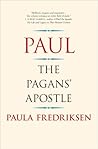
Unfortunately, the two biographies I mentioned in an earlier post, on John Calvin and the other on Cicero, were not very interesting at all. They were dry, too detail-oriented, without giving any real insight to the unique personalities. The Cicero one was a tad bit better, but I eventually got bored of that one as well. To switch gears a little bit from famous political-historical figures, per a friend's recommendation, I am going to start reading the autobiography of the greatest college basketball coach in history (I don't think I'm biased here, even if UCLA is my alma mater), John Wooden. Another friend of mine had the chance to visit Coach Wooden at his home to take a portrait shot before he passed away, and told me what a gentleman he was. I'm not much of an autobiography fan, but let's hope it's better than the last two!
Thursday, August 25, 2011

Tuesday, August 16, 2011
People's lives are interesting... to me at least (and hopefully to you too)
I'm not sure what it is, but I've always been very curious to learn the details behind the lives of figures in history. So, one of my reading habits is reading biographies of anybody I'm mildly interested in whenever I get the chance. I don't even recall what my first biography was, but thankfully, for the most part, I've enjoyed almost every single biography I've read to date. This past year, I've read a biography of the following (in no particular order):
George Whitefield
George Whitefield
Louie Zamperini
Alexander the Great
I admit, a couple of the books above I did not finish because they were not very good, but otherwise, the rest of them were fun to read. In terms of being the most compelling read, I'd have to say Metaxas' book was probably the best page-turner (despite the critique of some reviewers). And on the other hand, the Vanderbilt book lost a lot of steam as it continued and I basically skimmed the 2nd half... I'll be starting two biographies soon: one on John Calvin and the other on Cicero. Hopefully they'll be interesting reads.
My question to you is, do you like biographies? If so, what have you read that is worth reading? Any suggestions welcome!
Alexander the Great
I admit, a couple of the books above I did not finish because they were not very good, but otherwise, the rest of them were fun to read. In terms of being the most compelling read, I'd have to say Metaxas' book was probably the best page-turner (despite the critique of some reviewers). And on the other hand, the Vanderbilt book lost a lot of steam as it continued and I basically skimmed the 2nd half... I'll be starting two biographies soon: one on John Calvin and the other on Cicero. Hopefully they'll be interesting reads.
My question to you is, do you like biographies? If so, what have you read that is worth reading? Any suggestions welcome!
Thursday, August 11, 2011
Good article
I just came across an insightful article by Professor Stanley Hauerwas who teaches here at Duke, and in it, he lays out a strong critique of American Protestantism, and how its own presuppositions are contributing to its possible demise (at least in its current form). I recommend you all go read the article for yourself, but here's a quote to whet your appetite:
"More Americans may go to church than their counterparts in Europe, but the churches to which they go do little to challenge the secular presumptions that form their lives or the lives of the churches to which they go. For the church is assumed to exist to reinforce the presumption that those that go to church have done so freely. The church's primary function, therefore, is to legitimate and sustain the presumption that America represents what all people would want to be if they had the benefit of American education and money. That is what Americans mean by "freedom."
"More Americans may go to church than their counterparts in Europe, but the churches to which they go do little to challenge the secular presumptions that form their lives or the lives of the churches to which they go. For the church is assumed to exist to reinforce the presumption that those that go to church have done so freely. The church's primary function, therefore, is to legitimate and sustain the presumption that America represents what all people would want to be if they had the benefit of American education and money. That is what Americans mean by "freedom."
Tuesday, July 5, 2011
Journal article help?
I thought I'd ask for some help from my readers: does anyone have Stephen Westerholm's article from Svensk Exegetisk Arsbok 51-51 (1986-7) titled "On Fulfilling the Whole Law (Gal. 5.14)"? I'm sure if I went digging I could probably find a hardcopy somewhere and scan it, but I thought I'd give it a try here first to see if anyone might have a PDF or something they can send along...
Much appreciated!
Much appreciated!
Friday, July 1, 2011
Minority rules?
Thanks to my wife's suggestion, I started reading an interesting new book titled The Pleasures of Reading in an Age of Distraction, by Alan Jacobs. It seems to be a semi-response (though this is only a minor impetus for the writing of this book as far as I can tell) to the classic, How to Read a Book by Mortimer Adler. In it, he references a recent research conducted by the National Endowment for the Arts titled "Reading on the Rise: A New Chapter in American Legacy" (For the full report, go here). The first conclusion found in this research caught my eye:
 What surprised me was that the findings found in 2008 showed that for the first time in 26 years(!), the percentage of adult readers increased. In other words, since 1982, they conducted this survey 5 times and they have only witnessed a downward trend of adults in America who read a work of literature in the past 12 months. I suppose the advent of eBook readers may have contributed to the recent findings, but more than the increase in % readership, what intrigued me was that for the first time in almost a decade, the "majority" (by the slightest of margins; 50.2%) of Americans read some work of literature in the last 12 months.
I've been thinking about the kind of problems that the seemingly infectious aversion to reading creates in our society, and in my view, I don't know what other conclusion one can come to besides negative ones. It has shocked me more than a few times to hear some folks declare that they have not read a single book cover to cover since high school, claiming this feat as a badge-of-honor. And if not the detriment to society in general, then what about to our families and our churches? The study proved that the American-reader is now the "majority" over against the "minority" of American-illiterates, but it certainly feels as if minority rules strong in the overall American culture.
What interesting reads have you come across lately and what are some ways to battle this ubiquitous aversion to reading?
 What surprised me was that the findings found in 2008 showed that for the first time in 26 years(!), the percentage of adult readers increased. In other words, since 1982, they conducted this survey 5 times and they have only witnessed a downward trend of adults in America who read a work of literature in the past 12 months. I suppose the advent of eBook readers may have contributed to the recent findings, but more than the increase in % readership, what intrigued me was that for the first time in almost a decade, the "majority" (by the slightest of margins; 50.2%) of Americans read some work of literature in the last 12 months.
I've been thinking about the kind of problems that the seemingly infectious aversion to reading creates in our society, and in my view, I don't know what other conclusion one can come to besides negative ones. It has shocked me more than a few times to hear some folks declare that they have not read a single book cover to cover since high school, claiming this feat as a badge-of-honor. And if not the detriment to society in general, then what about to our families and our churches? The study proved that the American-reader is now the "majority" over against the "minority" of American-illiterates, but it certainly feels as if minority rules strong in the overall American culture.
What interesting reads have you come across lately and what are some ways to battle this ubiquitous aversion to reading?
Monday, June 20, 2011
Handmade
In our modern culture of industrialized goods, often there is a big premium placed on "handmade" goods. Handmade things are special in the sense that they are unique (if they are handmade, it's more than likely that no two are alike) and more often than not, personal (I think of friends who knit things for friends — handmade).
In the LXX and NT, the same word can be found: χειροποίητος. It's interesting that the word means, literally, "handmade." However, in the Scriptures, handmade things are seen in quite the opposite light; they are symbols of idolatry and if I'm not mistaken, the majority (if not all) of the occurrences of the word is used negatively. To make this point clear, translators of OT will make this case by rendering the Greek word as an "idol" or "image" (E.g., Lev 26:1; Isa 2:18).
In the OT, the critique appears to be against the handcrafted item of a god as opposed the unimageable YHWH (See the two examples above). And in the NT, the invective is against "handmade" circumcision as opposed to the spiritual/heart circumcision and the "handmade" temple as opposed to the spiritual temple (E.g., Mk 14:58; Acts 7:48, 17:24; Heb 9:11). While this might have been a prominent theme that flowed through Jewish thought, I didn't think that Greco-Roman culture gave all that much thought to this until I came across Seneca's letters today (albeit his very different angle). In it he writes:
"You are doing the finest possible thing and acting in your best interests if, as you say in your letter, you are persevering in your efforts to acquire a sound understanding. This is something it is foolish to pray for when you can win it from your own self. There is no need to raise our hands to heaven; there is no need to implore the temple warden to allow us close to the ear of some graven image (simulacri), as though this increased the chances of our being heard. God is near you, is with you, is inside you (prope est a te deus, tecum est, intus est). Yes, Lucilius, there resides within us a divine spirit, which guards us and watches us in the evil and the good we do. As we treat him, so will he treat us. No man, indeed is good without God — is any one capable of rising above fortune unless he has help from God? He it is that prompts us to noble and exalted endeavors. In each and every good man: A god (what god we are uncertain) dwells" [this last sentence is seen as a quote from Virgil's Aeneid].
--Seneca, Epistle 40.1-2
Though I'll probably have to study more about the kind of theology (if any) Stoic philosophers subscribed to, this paragraph from Seneca is an interesting parallel.
In the LXX and NT, the same word can be found: χειροποίητος. It's interesting that the word means, literally, "handmade." However, in the Scriptures, handmade things are seen in quite the opposite light; they are symbols of idolatry and if I'm not mistaken, the majority (if not all) of the occurrences of the word is used negatively. To make this point clear, translators of OT will make this case by rendering the Greek word as an "idol" or "image" (E.g., Lev 26:1; Isa 2:18).
In the OT, the critique appears to be against the handcrafted item of a god as opposed the unimageable YHWH (See the two examples above). And in the NT, the invective is against "handmade" circumcision as opposed to the spiritual/heart circumcision and the "handmade" temple as opposed to the spiritual temple (E.g., Mk 14:58; Acts 7:48, 17:24; Heb 9:11). While this might have been a prominent theme that flowed through Jewish thought, I didn't think that Greco-Roman culture gave all that much thought to this until I came across Seneca's letters today (albeit his very different angle). In it he writes:
"You are doing the finest possible thing and acting in your best interests if, as you say in your letter, you are persevering in your efforts to acquire a sound understanding. This is something it is foolish to pray for when you can win it from your own self. There is no need to raise our hands to heaven; there is no need to implore the temple warden to allow us close to the ear of some graven image (simulacri), as though this increased the chances of our being heard. God is near you, is with you, is inside you (prope est a te deus, tecum est, intus est). Yes, Lucilius, there resides within us a divine spirit, which guards us and watches us in the evil and the good we do. As we treat him, so will he treat us. No man, indeed is good without God — is any one capable of rising above fortune unless he has help from God? He it is that prompts us to noble and exalted endeavors. In each and every good man: A god (what god we are uncertain) dwells" [this last sentence is seen as a quote from Virgil's Aeneid].
--Seneca, Epistle 40.1-2
Though I'll probably have to study more about the kind of theology (if any) Stoic philosophers subscribed to, this paragraph from Seneca is an interesting parallel.
Saturday, June 18, 2011
2 Baruch 72
These days, I've been reading 2 Baruch in Syriac to keep up with the ancient language (using this text here), and so far, it's been a very interesting book to read. I've really enjoyed taking Syriac for the past year now (great professor [Dr. Lucas Van Rompay] as well as a bunch of interesting texts [Ephrem's commentary, Aphrahat's Demonstrations, NT/OT Peshitta, Odes of Solomon to name just a few]). This morning I was reading 2 Baruch 71-73, and if I'm not mistaken, this critical text contains a translation error (his transl.):
72.1 "Hear, now, also concerning the bright waters which are to come at the end, after these black (waters): this is the word. 72.2 After the signs have come, of which I have spoken to you before, when the nations become confused and the time of my Messiah comes, he will call all the nations; and some of them he will spare, and some of them he will kill. 72.3 These things, therefore, will come upon the nations which are not spared by him. 72.4 Every nation which does not know Israel and has trodden down the seed of Jacob, will live. And this because some from all the nations will be subjected to your people. But all those who have ruled over you or have known you will be given over to the sword."
My question concerns 72.3, which the critical text reads (I'm using a font called Estrangelo Edessa, so if you don't have Syriac fonts installed, it might not show correctly):
ܗܠܝܢ ܗܟܝܠ ܐܬܝܢ ܥܠ ܥܡܡܐ ܐܝܠܝܢ ܕܥܬܝܕܝܢ ܕܢܚܘܢ ܡܢܗ
Gurtner translates this as, "These things, therefore, will come upon the nations which are not spared by him". But the difficulty for me concerns the second to last word in the sentence which is from the root ḥy’, which is of course in this form means to give life, save, or spare. If my reading is right, it should be read: "These things, therefore, will come upon the nations which are spared/saved by him."
72.1 "Hear, now, also concerning the bright waters which are to come at the end, after these black (waters): this is the word. 72.2 After the signs have come, of which I have spoken to you before, when the nations become confused and the time of my Messiah comes, he will call all the nations; and some of them he will spare, and some of them he will kill. 72.3 These things, therefore, will come upon the nations which are not spared by him. 72.4 Every nation which does not know Israel and has trodden down the seed of Jacob, will live. And this because some from all the nations will be subjected to your people. But all those who have ruled over you or have known you will be given over to the sword."
My question concerns 72.3, which the critical text reads (I'm using a font called Estrangelo Edessa, so if you don't have Syriac fonts installed, it might not show correctly):
ܗܠܝܢ ܗܟܝܠ ܐܬܝܢ ܥܠ ܥܡܡܐ ܐܝܠܝܢ ܕܥܬܝܕܝܢ ܕܢܚܘܢ ܡܢܗ
Gurtner translates this as, "These things, therefore, will come upon the nations which are not spared by him". But the difficulty for me concerns the second to last word in the sentence which is from the root ḥy’, which is of course in this form means to give life, save, or spare. If my reading is right, it should be read: "These things, therefore, will come upon the nations which are spared/saved by him."
Subscribe to:
Posts (Atom)