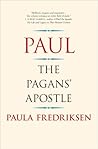
I would like to make a quick announcement regarding the recent publication by my doctoral supervisor, Luke Timothy Johnson:
Titled, Miracles: God's Presence and Power in Creation. Throughout the early period of writing my dissertation (he's already moved on to another project while I'm just about putting the finishing touches on trying to publish my first book!), we talked about him writing various chapters of this book. I'm glad to see it is finally out.
The idea of "miracles" is not an easy topic to discuss, still less to analyze and write about. I haven't picked this up yet but I will in the near future. I suggest you go and do the same!
Monday, September 17, 2018
Wednesday, August 29, 2018
Syllabi and Intellectual Property
Throughout the course of my PhD, I've been helped by numerous friends and teachers on the construction of the syllabus. Most of this help was indirect, by way of them sharing their syllabi for various courses taught. I've done the same for other younger colleagues in my program as well as in my dissertation completion fellowship where we as graduate fellows had the freedom to create our own syllabus for the Fall-Spring semesters. This upcoming cohort of fellows were given our recent syllabi and hopefully that would be of service to them. I'm curious where syllabus falls under the idea of "intellectual property." It's also interesting to see that with the advent of Academia.edu and other digital avenues of collaboration, talking about syllabi and sharing them are now much easier than before.
Recent examples:
Peter Martens at SLU had a mini-crowd sourcing of ideas for his Fall 2018 course, "Alexandria and Antioch: The Bible's First Experts." People could join in via Academia and comment variously about the stuff he's already written up.
Michael Satlow at Brown posted his syllabus for the course, "Mishnah and Tosefta." This one is not crowd-sourced but he does write on his website "Should anyone be interested" (whatever that might mean).
I just wrote a post about writing syllabi for various courses so this is highly relevant.
If you are writing a syllabus for a course, how do you go about your business, and where does your syllabus (or another's syllabus) fall under the rubric of "intellectual property"?
Recent examples:
Peter Martens at SLU had a mini-crowd sourcing of ideas for his Fall 2018 course, "Alexandria and Antioch: The Bible's First Experts." People could join in via Academia and comment variously about the stuff he's already written up.
Michael Satlow at Brown posted his syllabus for the course, "Mishnah and Tosefta." This one is not crowd-sourced but he does write on his website "Should anyone be interested" (whatever that might mean).
I just wrote a post about writing syllabi for various courses so this is highly relevant.
If you are writing a syllabus for a course, how do you go about your business, and where does your syllabus (or another's syllabus) fall under the rubric of "intellectual property"?
Monday, August 20, 2018
What Would You Teach?
Sometimes during the time off from researching, writing, and editing, I take some time to edit my syllabi and/or create new ones for potential courses I would be interested in teaching. I suppose as a recent PhD grad some might say I am wasting time, but I have found it very helpful to think about the kind of classes I would like to teach, what books would be assigned, what kinds of readings/assignments, etc. This also gets me into the know with recent scholarship on said topic and possibly certain questions I would like to pursue on this topic for myself at a later time.
I currently have in my folder around six/seven courses that I would be interested in teaching (courses like "Exegesis of ____" or "Intro to NT" doesn't count, as that would be a given in my field).
If any of you guys are out there reading this, if you were given free rein, what would you teach? And why?
I currently have in my folder around six/seven courses that I would be interested in teaching (courses like "Exegesis of ____" or "Intro to NT" doesn't count, as that would be a given in my field).
If any of you guys are out there reading this, if you were given free rein, what would you teach? And why?
Wednesday, August 1, 2018
Historical Facts
I wonder whether those in the field of religious studies, or biblical studies more specifically sometimes feel what I feel, i.e., a sense that many people don't care about "history" the way we do. Now, I don't say this as a way to criticize others, in fact, I wonder if the problem lies within academia itself. What I mean by this is that we argue and re-argue the most minute details of some esoteric subject that it very well may be that we are just talking among ourselves while neglecting to think about just what kind of value these discussions have for the broader public (I also want to talk about "public" scholarship in a later blog post). To qualify my statement further: on one hand, I am not saying religious studies or other humanities fields need to be strictly utilitarian in their approach/aim. Specialists in any field, including something like cancer research, will inevitably get into the minutiae that only other specialists can understand or critique. On the other hand, having worked with many undergraduate students for the last three semesters engaging in natural scientific research, it is also clear that sometimes humanistic inquiry just doesn't make any sense to anyone outside of that specific discipline, at least in the way they are often packaged. This is on a very different scale than the cancer research I just mentioned: even my student in computer science and big data can understand (somewhat) and appreciate how my other student in cancer biology is engaging her research, even if he may not really understand the mechanism behind working with knockout mice and performing Western blots.
But, that does not mean of course that historical research is useless and that historical details can be blatantly ignored. The current socio-political climate reveals clearly why history matters and why facts matter. On a less serious note, I remember one time I happened to be watching Jeopardy and the answer was something about the "epistle apostle" in the New Testament from "the first century BC." Truth be told, I felt my snobbery coming out, though none of the contestants even batted an eye at this mistake.
Just this morning, I came across an article and here is a screenshot from a page of that article:
This comes from a CNN Travel article here titled, "Beautiful photos reveal Matera, the Italian city carved into solid rock" (Aug. 1, 2018). Part of it describes very old grotto churches in Matera that have frescoes of biblical scenes. The problem is the author wrote that these works "dat[e] back hundreds of centuries." This would locate these artworks into the Paleolithic period, thousands of years before Jesus was even born!
Do historical facts matter to you? Why does it matter? And if it does matter, how do we show/teach our students and colleagues (of all types of disciplines) why it matters?
But, that does not mean of course that historical research is useless and that historical details can be blatantly ignored. The current socio-political climate reveals clearly why history matters and why facts matter. On a less serious note, I remember one time I happened to be watching Jeopardy and the answer was something about the "epistle apostle" in the New Testament from "the first century BC." Truth be told, I felt my snobbery coming out, though none of the contestants even batted an eye at this mistake.
Just this morning, I came across an article and here is a screenshot from a page of that article:
This comes from a CNN Travel article here titled, "Beautiful photos reveal Matera, the Italian city carved into solid rock" (Aug. 1, 2018). Part of it describes very old grotto churches in Matera that have frescoes of biblical scenes. The problem is the author wrote that these works "dat[e] back hundreds of centuries." This would locate these artworks into the Paleolithic period, thousands of years before Jesus was even born!
Do historical facts matter to you? Why does it matter? And if it does matter, how do we show/teach our students and colleagues (of all types of disciplines) why it matters?
Thursday, July 19, 2018
RCR (Responsible Conduct of Research)
As part of my final year of fellowship as a SIRE Graduate Fellow at Emory University, I am leading a summer course on Responsible Conduct of Research (RCR) for undergraduate researchers who are engaging in full-time research over the summer. RCR is not distinct to Emory, but is mandated by the NIH and NSF for those engaging in research funded by its various grants. During the school year I had a mixed group (humanities, social sciences, and natural sciences) of undergraduate students, but over the summer, my students are entirely made up of researchers in the natural sciences. I enjoy this very much as my own undergraduate background was in biology/evolution and I remain intrigued and interested in the kinds of research conducted in the natural sciences.
What I began to realize throughout this summer as we talked about issues such as "authorship" and "conflict of interest," "data management," "human and animal subjects" (all important topics for any type of research), there is no governing guideline of literature, as far as I know, such as the one provided by NSF and a host of other scientific institutions for how such topics might be applied in the social sciences, still less in the humanities. A quick Google search, however, yields some results at various institutions (to varying levels of complexity/clarity) that have tried to address this.
It seems to me to be a deficiency in our own training and/or our teaching of undergraduate students interested in pursuing further research in the humanities. Certainly the NEH has something like this called "Research Misconduct Policy" (here), but I would not doubt if not a single person who is publishing in my field currently has gone through any kind of formal training in RCR that exists for every single undergraduate/graduate student (then postdocs + PIs) working under the auspices of the NSF, NIH, or other similar governing bodies. There are certainly cases of mentorship issues, professional misconduct, research ethics, and etc. that are found in the humanities, and the ad hoc nature of how some of these issues are dealt with in the humanities, I think, often gives the impression to those on the other side of the fence that much of what we do is subjective and/or just speaking past each other in the abstract.
Would it be possible to create such a curriculum for students/researchers in humanistic inquiry, and what would that look like?
What I began to realize throughout this summer as we talked about issues such as "authorship" and "conflict of interest," "data management," "human and animal subjects" (all important topics for any type of research), there is no governing guideline of literature, as far as I know, such as the one provided by NSF and a host of other scientific institutions for how such topics might be applied in the social sciences, still less in the humanities. A quick Google search, however, yields some results at various institutions (to varying levels of complexity/clarity) that have tried to address this.
It seems to me to be a deficiency in our own training and/or our teaching of undergraduate students interested in pursuing further research in the humanities. Certainly the NEH has something like this called "Research Misconduct Policy" (here), but I would not doubt if not a single person who is publishing in my field currently has gone through any kind of formal training in RCR that exists for every single undergraduate/graduate student (then postdocs + PIs) working under the auspices of the NSF, NIH, or other similar governing bodies. There are certainly cases of mentorship issues, professional misconduct, research ethics, and etc. that are found in the humanities, and the ad hoc nature of how some of these issues are dealt with in the humanities, I think, often gives the impression to those on the other side of the fence that much of what we do is subjective and/or just speaking past each other in the abstract.
Would it be possible to create such a curriculum for students/researchers in humanistic inquiry, and what would that look like?
Sunday, March 18, 2018
My article is out (VC)
I'm happy to announce that my article titled, "Τὸ πνεῦμα in 1 Corinthians 5:5: A Reconsideration of Patristic Exegesis" is now out with Vigiliae Christianae in volume 72, issue 2.
Here's the abstract:
This article questions the assumption that there was a standard patristic interpretation regarding the identity of “spirit” in 1 Corinthians 5:5 (ἵνα τὸ πνεῦμα σωθῇ ἐν τῇ ἡμέρᾳ τοῦ κυρίου). Recent scholarship on 1 Corinthians 5 either fails to provide a fair representation of the available data or ignores the patristic exegesis altogether. The present essay addresses this deficiency in current scholarship by presenting the varieties of ways that early Christians read and interpreted “spirit” in 1 Cor 5:5.
This was a couple years' worth of work in the making (from editing, submission, acceptance, etc.), a work that was derived out of my current dissertation. I hope scholars find it to be a good article.
Check it out here (you'll need to be part of an institution or a paid subscriber to access the article).
Here's the abstract:
This article questions the assumption that there was a standard patristic interpretation regarding the identity of “spirit” in 1 Corinthians 5:5 (ἵνα τὸ πνεῦμα σωθῇ ἐν τῇ ἡμέρᾳ τοῦ κυρίου). Recent scholarship on 1 Corinthians 5 either fails to provide a fair representation of the available data or ignores the patristic exegesis altogether. The present essay addresses this deficiency in current scholarship by presenting the varieties of ways that early Christians read and interpreted “spirit” in 1 Cor 5:5.
This was a couple years' worth of work in the making (from editing, submission, acceptance, etc.), a work that was derived out of my current dissertation. I hope scholars find it to be a good article.
Check it out here (you'll need to be part of an institution or a paid subscriber to access the article).
Labels:
Apostle Paul,
Articles,
Emory,
Journal Articles,
NT,
Patristic,
Pauline,
Ph.D,
Scholarship
Tuesday, January 23, 2018
Race/Racism in Antiquity Pt. 1
I've been developing a course on race/religion in antiquity and am currently reading through a book titled, The Invention of Racism in Classical Antiquity (Princeton University Press, 2004) by Benjamin Isaac. He has a very interesting section in the introduction on how prejudices continue to be propagated even in modern literature (as supposedly innocuous as a travel guide!). I hope to blog through some interesting points I come across as I read through this book and continue to develop my syllabus.
He cites what he names as a "random example" taken from the Michelin Guide to Venice (1st ed. 1996) that says the following [with bold print and italics from original text]:
To stereotype the flavour of Venice would be detrimental to the magic of the place and offensive to her proud inhabitants. The Venetian is born with a positive outlook on life that is maintained by an imperturbable nature in which emotional involvement is tempered, in a very gentlemanly manner, by a certain indifference to anything that lies beyond the lagoon. This leads to him being noticeably predisposed to being tolerant, an innate quality acquired from a knowledge of different peoples distilled over the centuries. The blend of an almost Anglo-saxon [sic!] aplomb with boundless and all-embracing curiosity renders this personality even more fascinating.
It may be a random example, but Benjamin's comments are helpful: "This continues for half a page. It is a good example, because the authors are demonstrably unaware that they are spouting stereotypes—which they claim to reject. It is interesting that the rejection of stereotyping in the first sentence itself is justified by a stereotype: to stereotype Venetians would be offensive to those proud people, it is claimed, as if it is legitimate to stereotype the inhabitants of a town without magic, provided its inhabitants are not proud. Venetians are born with a positive outlook on life and tend to be tolerant because they dispose of a reservoir of knowledge accumulated over the centuries. This betrays confusion between acquired and inherited characters, comparable with what we encounter in many ancient texts."
Benjamin warns that even a "positive" stereotype is damaging in its propagation of prejudices.
He cites what he names as a "random example" taken from the Michelin Guide to Venice (1st ed. 1996) that says the following [with bold print and italics from original text]:
To stereotype the flavour of Venice would be detrimental to the magic of the place and offensive to her proud inhabitants. The Venetian is born with a positive outlook on life that is maintained by an imperturbable nature in which emotional involvement is tempered, in a very gentlemanly manner, by a certain indifference to anything that lies beyond the lagoon. This leads to him being noticeably predisposed to being tolerant, an innate quality acquired from a knowledge of different peoples distilled over the centuries. The blend of an almost Anglo-saxon [sic!] aplomb with boundless and all-embracing curiosity renders this personality even more fascinating.
It may be a random example, but Benjamin's comments are helpful: "This continues for half a page. It is a good example, because the authors are demonstrably unaware that they are spouting stereotypes—which they claim to reject. It is interesting that the rejection of stereotyping in the first sentence itself is justified by a stereotype: to stereotype Venetians would be offensive to those proud people, it is claimed, as if it is legitimate to stereotype the inhabitants of a town without magic, provided its inhabitants are not proud. Venetians are born with a positive outlook on life and tend to be tolerant because they dispose of a reservoir of knowledge accumulated over the centuries. This betrays confusion between acquired and inherited characters, comparable with what we encounter in many ancient texts."
Benjamin warns that even a "positive" stereotype is damaging in its propagation of prejudices.
Subscribe to:
Posts (Atom)